Short answer: The fastest way to grow sales is to get the guests you already have to come back more often, and to make ordering easy on the nights they can't sit down. Here's how to increase restaurant sales starting this week: collect contact info, recognize your regulars, fill slow nights on purpose and fix whatever makes ordering harder than it needs to be.
The National Restaurant Association projected that US restaurant and foodservice sales would reach $1.5 trillion in 2025, according to its 2025 State of the Restaurant Industry report. There is plenty of money moving through dining rooms and takeout counters, but guests are being careful about where it goes.
About 63% of diners said they had cut back on restaurant spending in the previous 12 months, according to Square's 2025 Future of Restaurants report, which surveyed diners in the US, UK, Canada and Australia. When people go out less, the places they keep visiting are the ones that feel familiar and easy. That is good news for an independent owner, because familiar and easy are things you can work on without a remodel or a new menu.
This guide is the practical version of how to increase restaurant sales. Each section answers a question owners ask us, gives the number behind it and ends with something you can try before the weekend.
What is the fastest way to increase restaurant sales?
The fastest way is to bring back the guests who already know you, because they're easier to reach and more likely to say yes than strangers. Most owners think about how to increase restaurant sales in terms of finding new people, and new people matter, but repeat guests carry more of the load than it looks like from the floor.
Toast says 7% of guests can drive up to 50% of a restaurant's revenue, based on data from restaurants that use its system. That figure comes from Toast's own customers rather than an independent study, but it matches what many owners see: a small group of regulars keeps the doors open on ordinary weeknights.
So the first job is simple to say and easy to skip. Find out who those guests are, give them a way to hear from you, and give them a reason to come back sooner than they would have on their own.
Try this week: pull your top repeat customers from your POS or online ordering system. If you can't see that list at all, that's the first thing to fix.
Why should I focus on regulars instead of chasing new customers?
You should focus on regulars first because they treat your team well and respond to the kind of attention that costs you very little. In Toast's Regulars Report 2026, 77% of diners surveyed said they tip more at restaurants where they're regulars.
That money goes to your team rather than your register, but it still matters to the business. Shifts full of regulars are better shifts to work, and a steady crew is part of why guests keep coming back.
The same report found that 48% of diners said staff remembering their name or usual order makes them feel most valued, compared with 22% who care most about points-based rewards. Only 30% said they always feel recognized at the places they visit most, according to Toast's Regulars Report 2026.
That gap is an opening. Recognition is free. It takes a host who greets people by name, a bartender who starts the usual when a regular walks in, and a note field in the POS that someone actually reads.
Try this week: at pre-shift, ask your team to name the regulars they know and what those guests usually order. Write it down where the next shift can see it.
Is a loyalty program worth it for a small restaurant?
For most small restaurants, yes, as long as it's simple enough that staff mention it and guests remember it. Diners are open to it: 76% said they were interested in joining restaurant loyalty programs in exchange for exclusive deals and discounts, according to Square's 2024 Dining Report.
The same Square report found that more than half of diners belong to two or fewer programs. Most people aren't worn out on loyalty apps yet, which means a local spot still has room to become one of the few they actually use.
The payoff shows up in return visits. According to Toast's Q1 2026 data from its own customers, joining a loyalty program raised a guest's return rate from a 7% baseline to nearly 30%.
Owners report the same kind of result. According to Square's 2025 Future of Restaurants report, which covered the US, UK, Canada and Australia, 83% of restaurant leaders with loyalty programs said the programs bring larger orders and repeat visits and have paid for themselves.
If you're wondering how to raise restaurant sales without discounting everything on the menu, this is the honest answer. A loyalty program lets you reward the people who already come in, instead of handing a coupon to someone who might never return.
A few things make a program work in a small room:
- Keep the reward easy to understand. A free item after a set number of visits beats a points chart nobody reads.
- Ask for a phone number or email at signup, so the program doubles as your marketing list.
- Train every person at the counter to offer it, every time, with a short, friendly line.
- Put the signup in your online ordering flow, not just at the register.
Try this week: if your POS already includes a loyalty feature, turn it on and write the line your team will use to offer it.
How can I get more customers into my restaurant on slow nights?
The most reliable way to fill a slow night is to message your own list directly with a clear reason to come in that night. Ads and posts can help, but a text or email to people who already like you is the shortest path from a quiet Tuesday to a fuller room.
Pick the night that hurts the most and give it an identity. It could be a family meal deal, an industry night, a dish you only make that evening or a happy hour that runs later than usual. The point is that guests should know what Tuesday at your place means.
Then send it. A short text the afternoon of, or an email the morning before, reminds people while they're still deciding where to eat. This is exactly what our email and SMS marketing work is built for: building the list at the counter and in your ordering flow, then using it to fill the nights that need filling.
Texting has a few setup rules, including carrier registration and clear opt-in, that are worth getting right before your first send. Our guide to SMS marketing for restaurants walks through registration, opt-in and what to say in your first text.
Try this week: choose your slowest night, decide on the offer, and write the message now so it's ready to go out the day of.
Should my restaurant offer online ordering, or will the app fees eat my profit?
You should offer it, because a growing share of guests eat your food somewhere other than your dining room, but steer regulars toward ordering direct wherever the numbers support it. Takeout, delivery and drive-thru made up 30% of customer traffic at full-service restaurants in 2024, up from 19% in 2019, according to the National Restaurant Association's Off-Premises Restaurant Trends 2025 report, which uses Circana CREST data.
The habit is a weekly one, too. The same National Restaurant Association report found that 47% of US adults say they pick up takeout at least once a week, and 37% say they order delivery at least once a week.
Delivery apps are useful for being found by people who don't know you yet. The trade-off is that part of each ticket goes to the app, and the guest's contact info usually stays with the platform rather than with you. That's why the better move for regulars is a direct ordering link you control.
Here's how to improve restaurant sales on the off-premises side without dropping the apps:
- Put your own order link on your Google listing, your website and your Instagram bio.
- Tuck a card into every delivery bag that invites guests to order direct next time and join your list.
- Make sure your menu, prices and hours match everywhere, so nobody gives up halfway through an order.
Try this week: order from your own restaurant on your phone, start to finish, and note every spot where you'd have given up.
A 90-day marketing plan for your restaurant
Fifteen pages covering what to post, what to spend, and what to track with a content calendar and ideas for you to post with.
Plan will be delivered via email with the PDF attached.
We only use your email to send the plan. Privacy policy
How do I get servers to upsell and raise the average check?
Servers raise the check best when they recommend things they've tasted and believe in, not when they recite a script. The average check is the part of how to increase restaurant sales that happens at the table, and guests can tell a genuine suggestion from a sales pitch.
Start with a short pre-shift tasting. When a server has actually eaten the special or tried the new cocktail, they can describe it in their own words, and that's what gets a guest to say "sure, let's try it."
Give the team a small, clear set of pairings: a side that goes with the most popular entree, a dessert that travels well for takeout orders, a drink that suits the dish people order most. Keep it to what fits naturally so it never feels pushy.
Recognition helps here too. Toast's research found that guests value being known more than collecting points. A server who says "you liked the brisket last time, and the new smoked chicken is in the same style" is making a recommendation, but to the guest it feels like being remembered.
Try this week: pick a single item to feature, have every server taste it before service, and check at the end of the week how many sold compared with the week before.
What did this look like for a Houston restaurant?
For Yoyo's Hotdog, it looked like turning a loyal late-night following into a business that kept bringing in new people. Yoyo's spent years as the place you lined up for after a night out, and that reputation kept the lights on but stopped bringing new people in.
We rebuilt the brand, the content and the loyalty program around a menu that never changed. Nothing about the hot dogs was reinvented. The work went into giving people a reason to come back and a way to hear from Yoyo's when they weren't standing in line.
The results, as stated in the Yoyo's Hotdog case study: 229% sales growth in year one, and 38,000 loyalty members from zero.
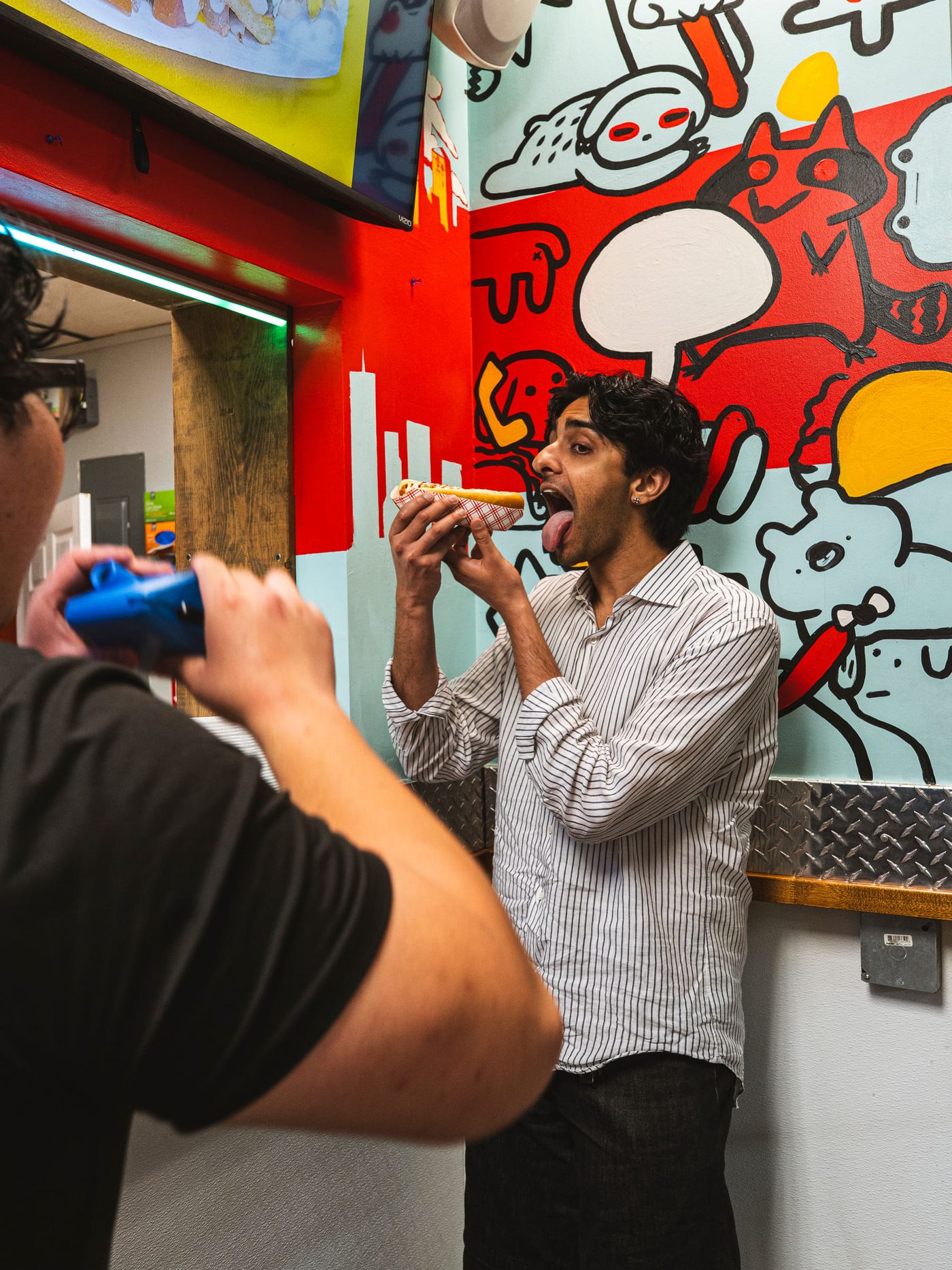
The lesson for other owners is that you may not need a new concept to figure out how to increase restaurant sales. The work at Yoyo's used the same ideas in this guide: a loyalty program, a list to message and content that kept the place in front of people.
What can I do this week to boost restaurant sales?
You can start with a short list of tasks that each take an afternoon or less and build on each other. If you've been wondering how to boost restaurant sales without a big budget, this is the order we'd go in:
- Pull your list of repeat guests from your POS or ordering system.
- Teach the team the names and usual orders of your regulars.
- Turn on a simple loyalty program and write the line staff use to offer it.
- Pick your slowest night and give guests a reason to come in.
- Write and schedule a text or email for that night.
- Order from your own restaurant online and fix whatever slowed you down.
- Add a direct-order card to every delivery bag.
- Have servers taste a featured item before service.
None of these steps require a new menu or a remodel. That's what makes this the most practical answer to how to increase restaurant sales: start with the guests you already have, and make it easier for them to come back.
Want help getting started?
The easiest way to see what this could look like for your place is our demo shoot. We spend two hours filming at your restaurant, and three days later you get a reel, ten photos and a written plan for bringing guests back more often. You keep the content either way.
Book your demo shoot and we'll start with the nights that need it most.