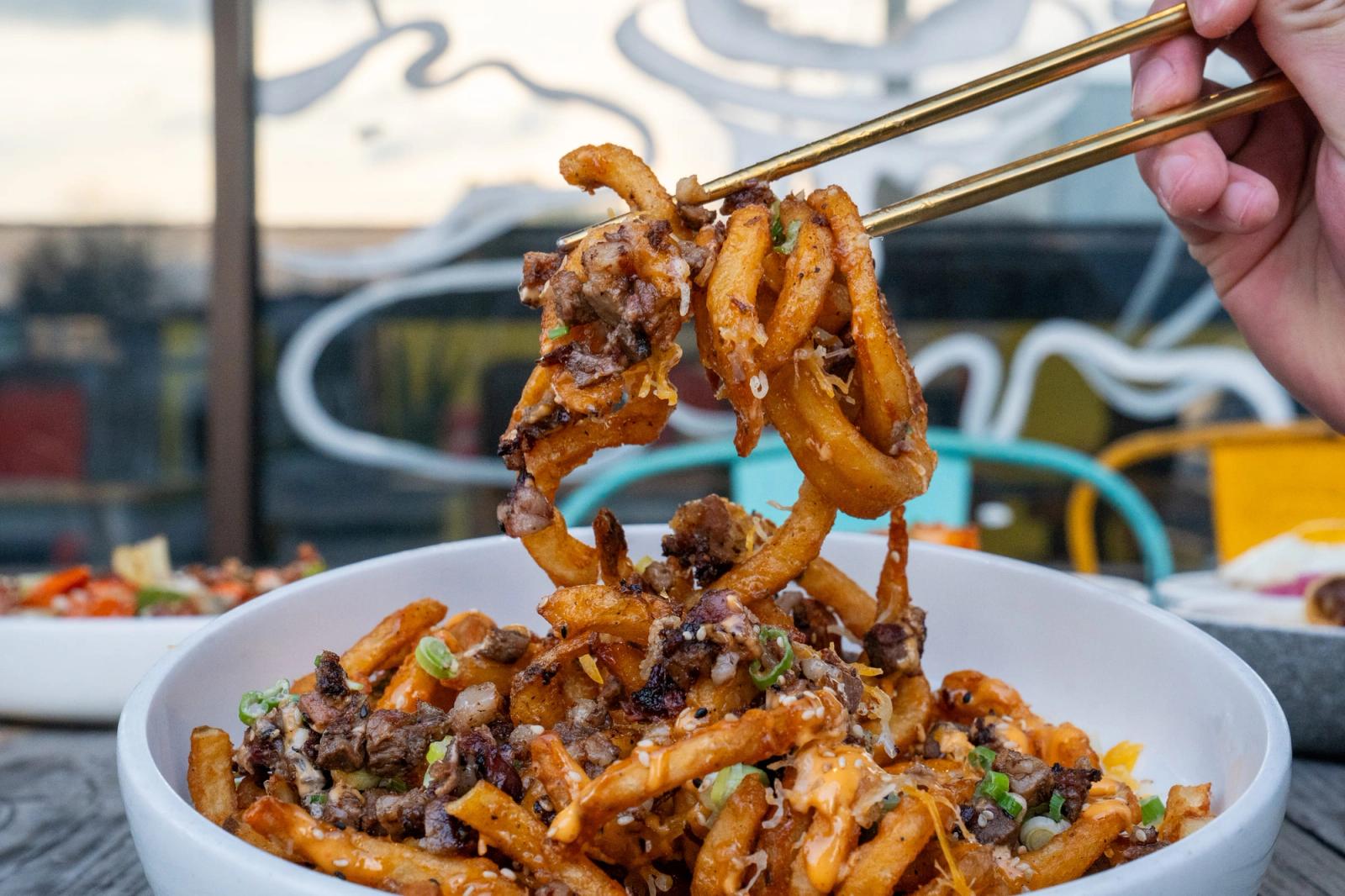
Short answer: When nothing new is on the menu, post the food you already sell and the people and routines behind it: prep, regulars, staff, sourcing and your bestsellers. Food social media marketing works on quiet weeks because guests want to see what they will actually eat, not a constant stream of announcements.
Most weeks at an independent restaurant look a lot like the week before. The menu is the same, there is no event on the calendar, and nobody has news to share. That is usually when the posting schedule slips, because it feels like there is nothing to say.
There is plenty to say. Food social media marketing stalls on quiet weeks for a practical reason: most owners only have a plan for the weeks when something happens. What you need is a list of post types that don't depend on anything new, plus a caption you can fill in while the kitchen is busy.
This guide gives you both. Think of it as a content bank you build once and draw from every week the menu stays put.
What should a restaurant post when there is nothing new?
Post what guests already come for: the dishes you make every day, the work that goes into them, and the people who make and eat them. According to Toast's 2024 restaurant social media survey, 84% of people would rather see photos of the food and drinks a restaurant actually serves on its social media page. That is good news for a quiet week, because your regular menu is exactly what people want to see.
The same Toast survey found that 62% of people sometimes look at a restaurant's social media before deciding to eat there. Someone checking your page on a Thursday afternoon is not looking for news. They want to know what the food looks like, what the room feels like, and whether the place is open and lively.
So the job of food social media marketing in a slow stretch is simple: show the real thing, often, from new angles. If you have ever stared at your phone wondering what to post for a restaurant that hasn't changed its menu in years, the answer is the menu itself, shown honestly.
What are good restaurant content ideas for a slow week?
The best slow week restaurant posts come from routines that happen whether or not anything is new: prep, regulars, staff, sourcing and repeat bestsellers. Each category below includes what to film or photograph and a caption template you can fill in quickly. Swap the bracketed parts for your own details and rewrite the rest in your own voice.
Prep
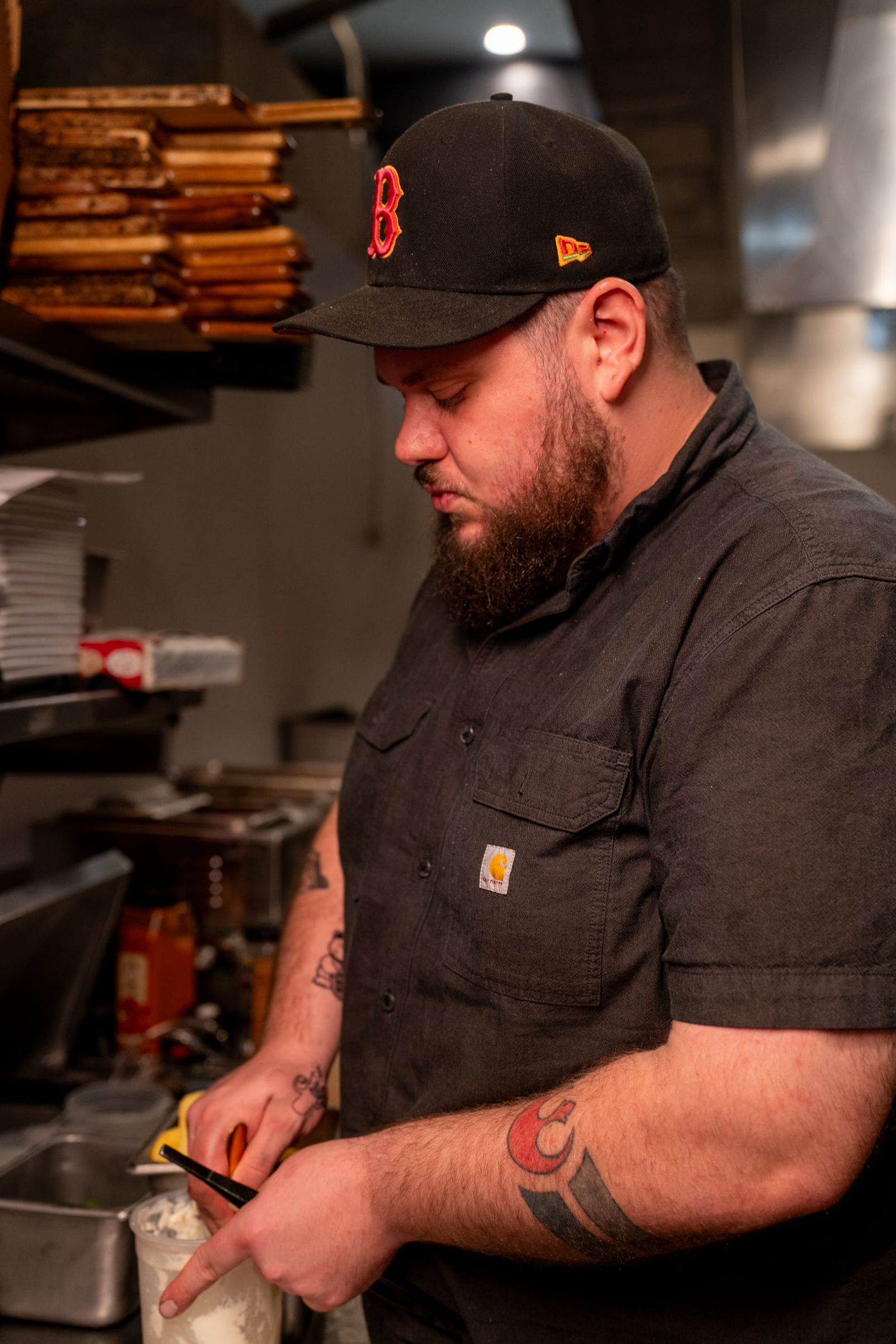
Prep is the work guests never see, and it makes good content because it shows care. Think dough being portioned, onions being diced by the case, a stock that has been going since morning, or sauces being labeled for the night.
Shoot it close and keep it short. A few seconds of hands working is enough for a story or a reel, and a single sharp photo of a full prep station works well in the feed.
Before we open: [what's happening, like the salsa verde getting made fresh]. It's the reason [dish] tastes the way it does. See you at [opening time].
Regulars
Regulars are proof that people come back, and many of them are happy to be part of it. Always ask before you photograph a guest, and tag them only if they say yes.
A regular's usual order is an easy post. So is a short note about how long someone has been coming in, if they're comfortable with you sharing it. These posts tell a newcomer that the food is worth a second visit without you having to say so.
[Name] has been ordering the [dish] since [when]. If you've never tried it, take their word for it. [Hours or order link].
Staff
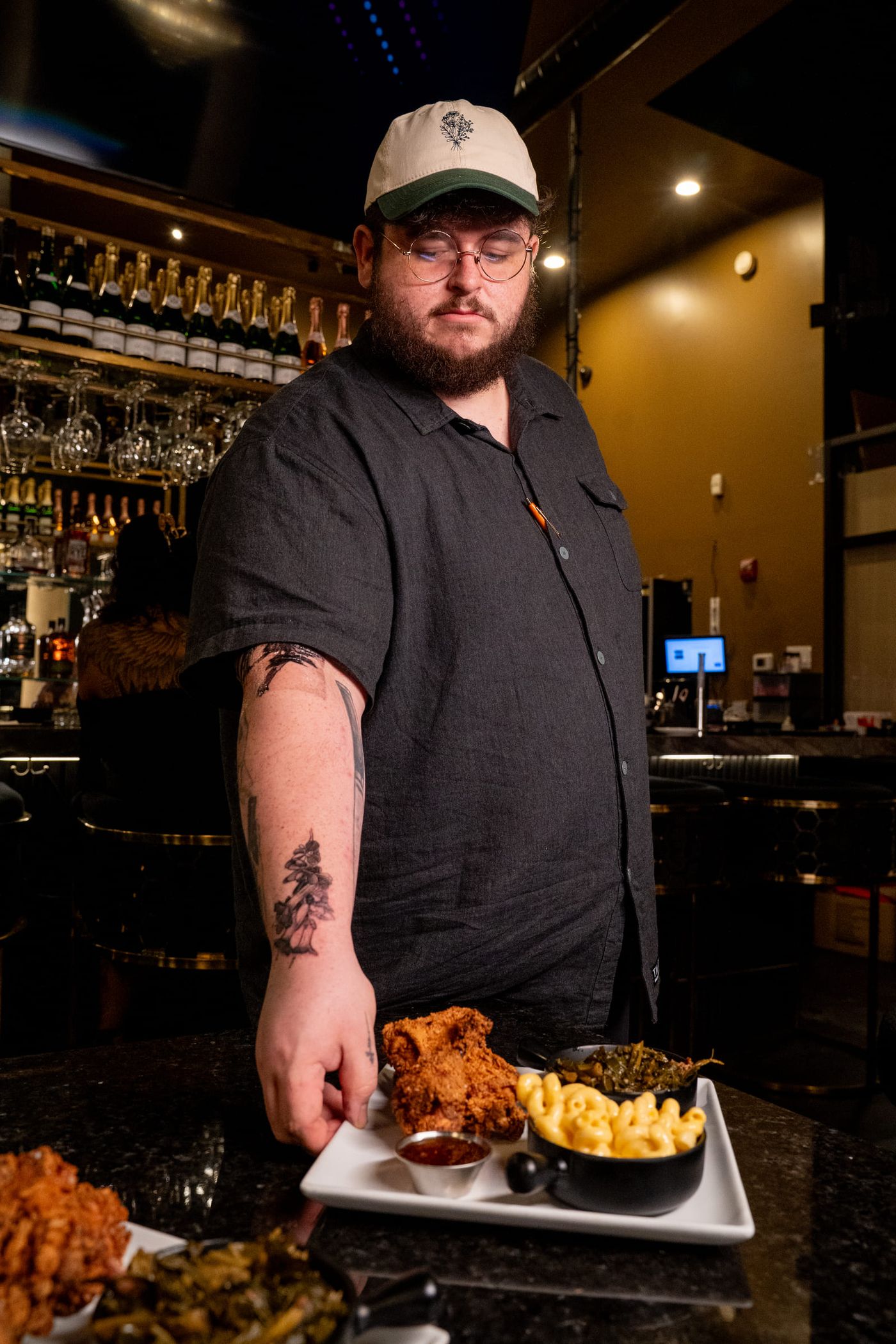
Your crew is the part of your restaurant nobody else has. Introduce one person at a time: their role, what they handle on a busy night, and the dish they'd tell a first-timer to order.
Not everyone wants to be on camera, and that's fine. Hands at the grill or a shot from behind the line still tells the story. When an owner or chef is willing to talk to the camera, those posts tend to feel the most personal.
Meet [name], our [role]. Ask them what to order and you'll hear [their pick] every time. Come say hi on [day].
Sourcing
Where your ingredients come from gives guests a reason to trust the plate. A delivery from a nearby farm, a supplier you've worked with for years, the bakery that makes your buns, or the market run on Saturday morning all count.
Only name a supplier if they're happy to be named, and tag them when you do. They often share the post, which puts your food in front of their followers too.
Our [ingredient] comes from [supplier] in [where they are]. You'll taste it in the [dish].
Repeat bestsellers
Your bestsellers are the reason most people walk in, so they deserve the most airtime. Treat each one as a recurring character rather than a one-time feature.
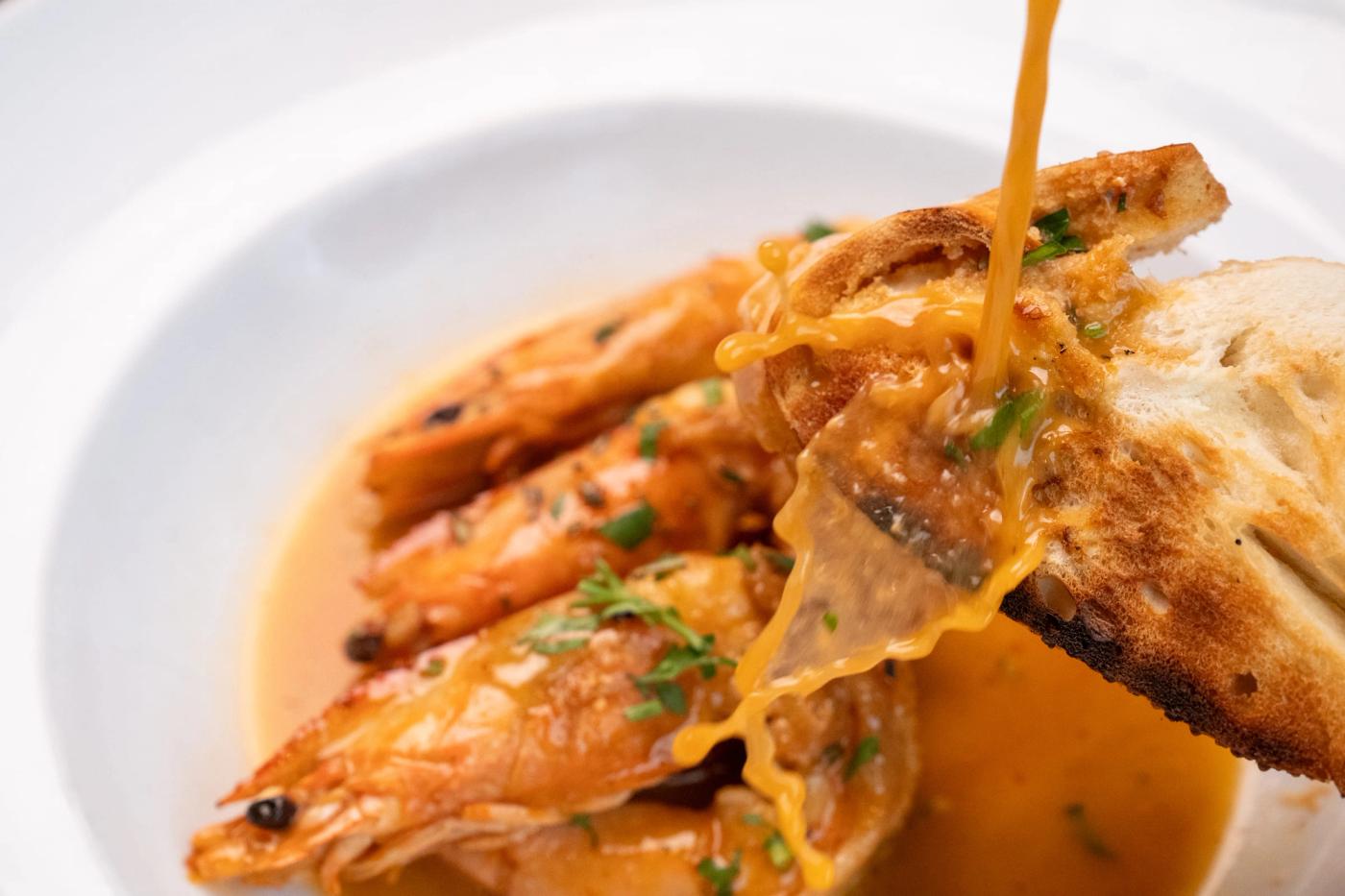
Pick the dishes that sell the most and give each one its own small series over time: how it's built, what it looks like at the table, what people pair it with.
The [dish], made the way we've always made it: [a short line on what's in it]. Still one of our most ordered. [Order link or hours].
Can I repost the same dish?
Yes, you can post the same dish again and again, as long as each post shows it a little differently. Not everyone who follows you sees every post, and the people who do are often the guests who already love that dish and enjoy seeing it.
What gets old is the same photo with the same caption. What works is the same dish from a different angle: being plated, being pulled apart, being carried to a table, sitting next to a drink, or ordered at lunch versus late at night. Each of those is a new post about the same plate.
Yoyo's Hotdog in Houston is the clearest example we have. Yoyo's was the place people lined up for after a night out, and that reputation kept the lights on but stopped bringing new people in. We rebuilt the brand, the content and the loyalty program around a menu that never changed, and the Yoyo's Hotdog case study reports 229% sales growth in year one and 38,000 loyalty members from zero, according to its published results.
The lesson is not that one kind of post did all the work. It's that a menu with nothing new on it did not stand in the way. If your food social media marketing keeps waiting for a new dish before it says anything, the Yoyo's story is a good reason to stop waiting.
How do I keep posting without repeating myself?
Rotate through the categories on a set schedule and change the format, the angle or the caption each time you come back to one. Repeating a category is fine; repeating the exact same post is what feels stale.
A simple way to set this up:
- Assign each category to a day of the week, so one day is always prep, another is always a bestseller, and so on.
- Keep a running list on your phone of shots you notice during service: the first ticket of the night, a full pass, a regular's usual order.
- Alternate formats within a category: a photo one week, a short video the next, a story poll after that.
- Rewrite the caption template in your own words each time instead of pasting it.
When you return to a category, ask what you haven't shown yet. Prep might be the bread one week and the sauces the next. Staff might be the line cook this week and the dishwasher the week after. Over a few months you'll build a library to pull from instead of facing a blank page every Monday.
This is where most good restaurant content ideas come from. The more closely you watch your own routines, the more you notice, and steady food marketing on social media becomes a habit rather than a scramble.
A 90-day marketing plan for your restaurant
Fifteen pages covering what to post, what to spend, and what to track with a content calendar and ideas for you to post with.
Plan will be delivered via email with the PDF attached.
We only use your email to send the plan. Privacy policy
What food content gets the most engagement?
Real photos and short videos of the food you actually serve are the safest bet, and replying to people builds on whatever you post. The research we trust doesn't rank photos against videos against behind-the-scenes posts for restaurants, so be careful with anyone who promises a single winning format.
What the research does show is clear enough to plan around. BrightLocal's 2025 Local Consumer Review Survey found that more than three-quarters of US consumers watch video when looking up information about local businesses. BrightLocal's 2024 survey found that 34% of consumers use Instagram to find reviews of local businesses, which makes food content ideas on Instagram worth the effort, especially short video.
Don't drop Facebook in favor of newer apps. According to Toast's 2024 survey, 59% of people use Facebook more than any other platform to find new restaurants.
Replies matter as much as posts. Toast's 2024 survey found that 43% of people think it is very important for restaurants to reply to comments or messages on social media. Sprout Social's research across all industries points the same way: people care more about originality and how a brand interacts with them than about how often it posts when deciding whether to follow.
A quiet week is a good time to catch up on comments and messages. If answering them and keeping the calendar full is the part that keeps slipping, that is the work our social media management team takes off your list.
Social is also a real discovery channel, not just a place to keep regulars updated. Toast's 2025 data found that social media is the second most common way diners find a restaurant, at 21%, behind Google, and among 18- to 34-year-olds that figure rises to 46%.
How many posts a week does a restaurant need?
There is no proven weekly number for restaurants, so post as often as you can keep up every single week. A steady rhythm you can hold for months does more for food social media marketing than a burst of daily posts followed by silence.
Even general brand data points away from chasing volume. Sprout Social's 2025 Content Benchmarks Report found that brands now post less often than the 11 posts per day across all networks they averaged in 2022, and that research covers every industry, not just restaurants. For a small restaurant, the takeaway is that originality and interaction count for more than frequency.
Timing helps more than volume. According to Toast's 2025 reservations data, 45% of the reservations it saw on its Toast Tables platform in Q3 2024 were made the same day. That makes a same-day post, like a photo of tonight's bestseller or a note that you have open tables, one of the most useful things you can put up.
If you run a bar alongside your kitchen, our guide to social media marketing for bars covers platforms and posting rhythm for the drinks side of the business.
Want help filling the calendar on quiet weeks?
The easiest way to stock your content bank is to film it all at once. Our demo shoot is two hours of filming at your restaurant, covering your prep, your crew and the dishes people already come back for.
Three days later you get a reel, ten photos and a written plan for your quiet weeks, and you keep the content either way. Book your demo shoot and we'll find a time that works around service.


