
Short answer: Social media marketing for bars works when you post real photos and short videos of your drinks, your room and your crowd, make every event easy to find, and answer comments and messages quickly. Pick the platforms your guests already use, set a posting rhythm you can keep on a busy week, and make each post a reason to come in soon.
Most bar owners already know they should post more. The hard part is finding the time between ordering, scheduling staff, fixing the ice machine and closing out at the end of the night.
This guide is the practical version. It covers which platforms to use, what to post, how often to post, how to promote events without sounding like an ad, and a short list you can work through this week without buying new equipment.
Much of the advice on social media marketing for restaurants applies to bars too. The differences are in timing, since bars sell evenings and events more than meals, and in the extra care needed around alcohol content.
Does social media marketing for bars actually bring people in?
Yes, because many guests now check a bar's social accounts before deciding where to go. According to Toast's 2024 survey of diners who use social media at least weekly, 62% of diners sometimes check a restaurant's social media before deciding to go there.
Social is also competing with search. In the same Toast 2024 survey, 42% of diners said they prefer social media over search engines like Google and Yelp when looking for new restaurants, and Toast's bar trends page applies that figure to restaurants and bars.
Guests follow venues directly, too. Toast's 2024 survey found that 50% of diners follow more restaurant accounts than influencers, while only 22% follow more influencers. Your own account is a real channel, and the people who follow it chose to hear from you.
Square has seen similar interest: according to Square's restaurant marketing research, 52% of consumers are interested in local businesses that use social media to communicate with them.
Which social media platform is best for a bar: Instagram, TikTok or Facebook?
The best platform is the one your current guests already use, and for many bars that still includes Facebook. According to Toast's 2024 survey, 59% of diners use Facebook more than any other platform to find new restaurants.
That surprises owners who assume their crowd lives only on Instagram or TikTok. Facebook is where event listings, check-ins and group shares still happen, which matters for trivia, watch parties and live music.
Instagram and TikTok are where short video does most of its work. A quick clip of a bartender building a cocktail, or a full patio as the sun goes down, usually travels further than a flyer.
If time is tight, a practical setup is Instagram for photos and reels, Facebook for events, and the same short videos shared to TikTok when they fit. You don't need to be everywhere. You need to be steady where your guests are.
To find out where that is, ask your bartenders where guests say they heard about you, and look at which of your accounts gets comments and shares rather than only likes.
What should a bar post on social media?
Post photos and short videos of your drinks, your food and your room, because that's what people want to see before they visit. According to Toast's 2024 survey, 84% of diners prefer to see photos of food and drinks on a restaurant's social media page.
The easiest content is what already happens on a normal shift. We cover that idea in more detail in Post what's already happening, but here is how it applies behind a bar.
Drinks, shot up close
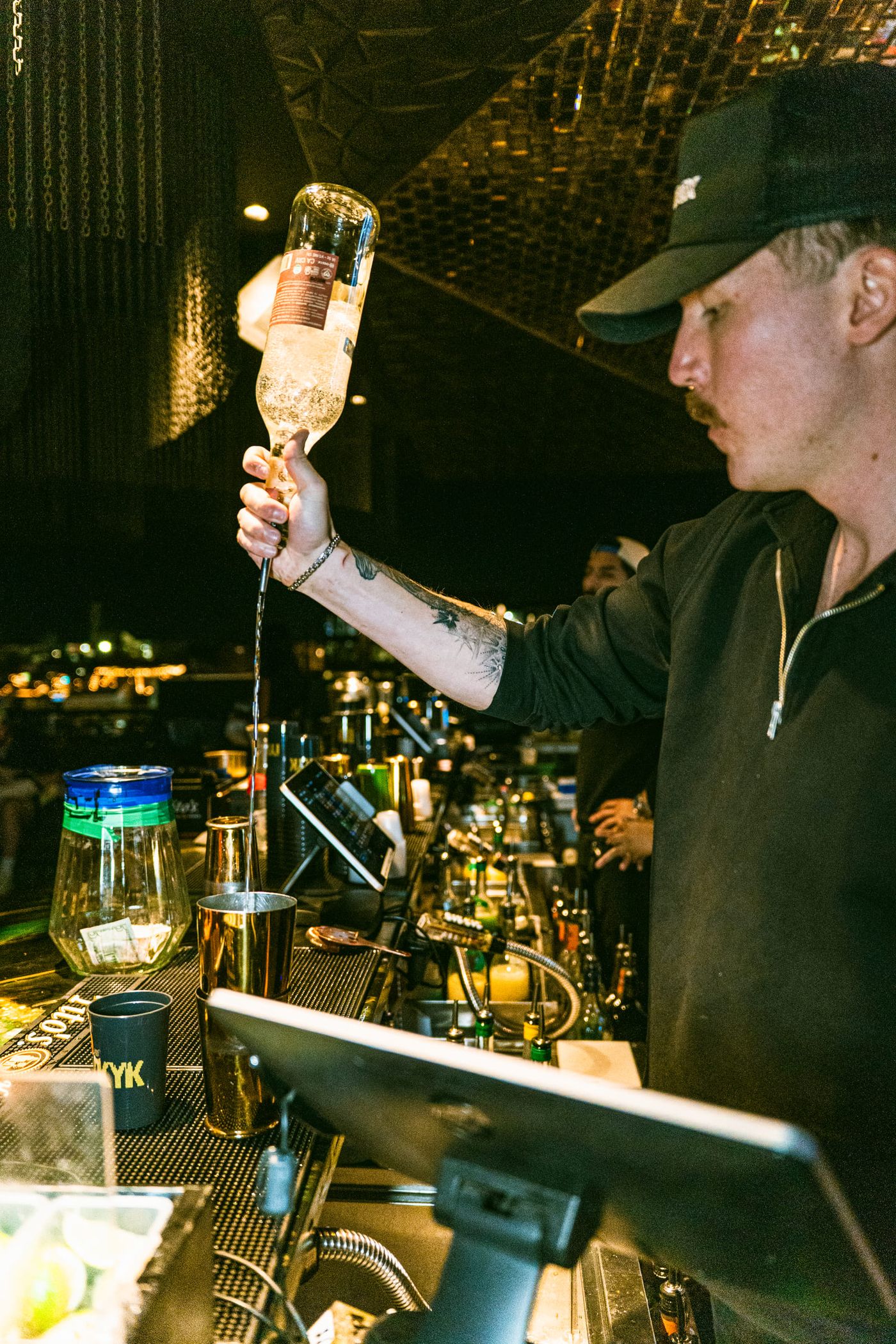
Film the pour, the shake, the garnish and the first sip. Natural light near a window or the warm light over the bar works better than a phone flash. Shoot vertical so the clip works for reels and stories.
The room at the hours you want filled
People want to know what the place feels like before they walk in. Show the patio before happy hour, the booths while the band sets up, and the crowd on your busiest night. If you want more people on quieter nights, show those nights at their best moment.
The people behind the bar
Regulars come back for the bartender as much as the drink. A short clip of your bar manager explaining a new cocktail, or a server sharing a favorite late-night order, gives people a reason to feel like they already know you.
What's coming up
Post upcoming events, new menu items and seasonal drinks early, then post them again on the day. Keep the hours, location and date in the caption so nobody has to message to ask.
How often should a bar post on social media?
Post as often as you can keep up without the quality dropping, and keep the rhythm steady. A consistent schedule does more for social media marketing for bars than a burst of posts followed by weeks of silence.
Plan around the nights you most want to fill. Post about each event a few days ahead and again the day it happens, and use stories during service to show the room as it fills up.
Batch the work. Set aside an afternoon before opening to shoot drinks, the room and staff, then schedule posts from that session across the coming weeks. Stories can stay loose and live, while feed posts and reels benefit from a little planning.
If a week gets away from you, post something simple rather than nothing. A clean photo of your best-selling drink with the hours in the caption still does its job.
How do you promote happy hour, trivia nights and events without it looking like an ad?
Show the event happening instead of announcing it. A clip of last week's trivia crowd reacting to a hard question sells next week's trivia better than a graphic listing the start time and the prize.
A few ways to keep event posts feeling like your bar rather than a billboard:
- Film the build-up: the band's soundcheck, the bartender prepping garnishes, the first guests walking in.
- Let regulars and staff do the talking. A quick line from your trivia host lands better than a caption in all caps.
- Put the details in the caption, not only on the image. Day, time and any cover charge belong in text people can read and search.
- Repost guests who tag you, with their permission, so the event shows up through people they know.
- Build themed nights around the calendar and the season.
Seasonal themes are worth planning early. According to Yelp's Trend Tracker, searches for "holiday bars" rose 12% in October 2024 compared with October 2023, which suggests people start looking for seasonal spots before the season arrives.
Do bars need to reply to comments and messages on social media?
Yes, and guests notice when you don't. According to Toast's 2024 survey, 43% of diners think it's very important for restaurants to respond to comments or messages on social media.
For bars, messages often carry money: private event inquiries, group reservations, questions about whether the game will be on. A message answered the next afternoon may already have gone somewhere else.
Set a simple routine. Check comments and messages before opening and again after the rush, thank people who tag you, and answer common questions in public comments so the next person sees the answer too.
This is the part most owners drop first, and it's a big part of what good restaurant social media management covers. Our social media management service handles the calendar and the comments so it isn't one more thing on your list.
Is it worth paying influencers or running ads to get people into a bar?
It can be, as long as you know what you want from it. According to Toast's 2024 survey, 40% of diners base their decision to eat somewhere on an influencer's review, so a good local creator can put you in front of people who haven't found you yet.
Keep in mind the earlier Toast finding that more diners follow restaurant accounts than influencers. A creator's visit brings attention for a few days, and your own account is what keeps those new followers seeing you afterward.
If you work with creators, pick people whose audience actually lives near you, invite them on a night that shows the bar at its best, and agree on what they'll post before they arrive.
Paid ads work best when they point at a single outcome, like filling a slow weeknight or launching a new cocktail menu. Boosting random posts tends to spend money without a clear result.
A 90-day marketing plan for your restaurant
Fifteen pages covering what to post, what to spend, and what to track with a content calendar and ideas for you to post with.
Plan will be delivered via email with the PDF attached.
We only use your email to send the plan. Privacy policy
Are there rules about posting alcohol content or drink specials on social media?
Yes. Each social platform has its own policies on alcohol content, and they are usually stricter for paid ads than for regular posts. Texas also has its own rules on alcohol advertising, set by the Texas Alcoholic Beverage Commission.
Before you run a drink special as a paid ad, read the platform's alcohol policy and check the TABC's advertising guidance or ask your attorney. Rules can change, so check again when you plan a new promotion.
For everyday posts, a few habits keep you on safe ground:
- Don't feature anyone who looks underage, including in the background.
- Show people enjoying drinks, not drinking to excess.
- Skip captions that push heavy or fast drinking, like drinking challenges.
- Mention rideshare or safe rides home on big nights when it fits.
What does this look like for a Houston spot?
The clearest Houston example we can share is Yoyo's Hotdog. It isn't a bar, but its crowd overlaps with every bar in town: Yoyo's was the place you lined up for after a night out.
That reputation kept the lights on and stopped bringing new people in. We rebuilt the brand, the content, and the loyalty program around a menu that never changed. According to the Yoyo's Hotdog case study, the results were 229% sales growth in year one and 38,000 loyalty members from zero.
The lesson for social media marketing for bars is that you don't need a new concept to give people a reason to come back. Yoyo's already had the story. The work was showing it consistently and turning followers into regulars through a loyalty program.

The same applies to a neighborhood bar in the Heights or a cocktail spot in Montrose. Most have regulars, house drinks and traditions that never made it onto their feed.
If you're comparing options for restaurant social media management in Houston, ask how each team would show what already makes your place worth the trip, rather than what they would change.
What can you do this week to start?
Here's a short list you can finish before the weekend, and it covers the basics of social media marketing for bars:
- Update the bio on every account with current hours, address and a link to your menu or reservations.
- Ask your bartenders where guests say they found you, and decide which platforms get your attention.
- Shoot a batch of drink close-ups and room clips before opening on a weekday.
- Post your next event on Facebook as an event and on Instagram as a reel.
- Reply to every unanswered comment and message from the past month.
- Pick a set time each day to check messages, and put it on someone's shift.
None of this requires new equipment or a new menu. It just takes making social media a regular part of running the bar.
Want us to film your first batch?
If you'd like to start social media marketing for bars with content already in hand, book a demo shoot. We spend two hours filming at your place, and three days later you get a reel, ten photos and a written plan. You keep the content either way. Book your demo shoot.
