
Short answer: For a working restaurant, food and drink branding is mostly what guests see before they walk in: your food photos, your menu and your Google listing, with the logo playing a smaller part than most agency portfolios suggest. Lock down a clean menu, a consistent set of photos and an accurate listing first, and leave a full logo redesign for later unless your current one is confusing people.
What does food and drink branding mean for a small restaurant?
For a small restaurant, food and drink branding means the impression a guest forms before they ever taste anything, and most of that impression comes from pictures and words, not from a logo. It is the photo of your tacos on Instagram, the menu someone pulls up while deciding where to eat after work, and the Google listing that shows your hours and your room.
Search for restaurant branding and most of what comes up is agency portfolio work: logo sheets, color palettes, custom typefaces. That work has its place, especially for a brand new concept or a group with several locations.
For an independent spot that is already open, though, the brand guests experience is mostly made of three things you can improve this month:
- Your photos. The pictures on your Google listing, social pages, website and delivery apps.
- Your menu. The dish names, descriptions, prices and layout, in print and online.
- Your Google listing. The name, hours, photos and reviews a hungry person sees first.
A logo shows up on all three, but it is rarely the reason someone picks you over another place nearby. The food does that, and photos are how the food gets seen before the visit.
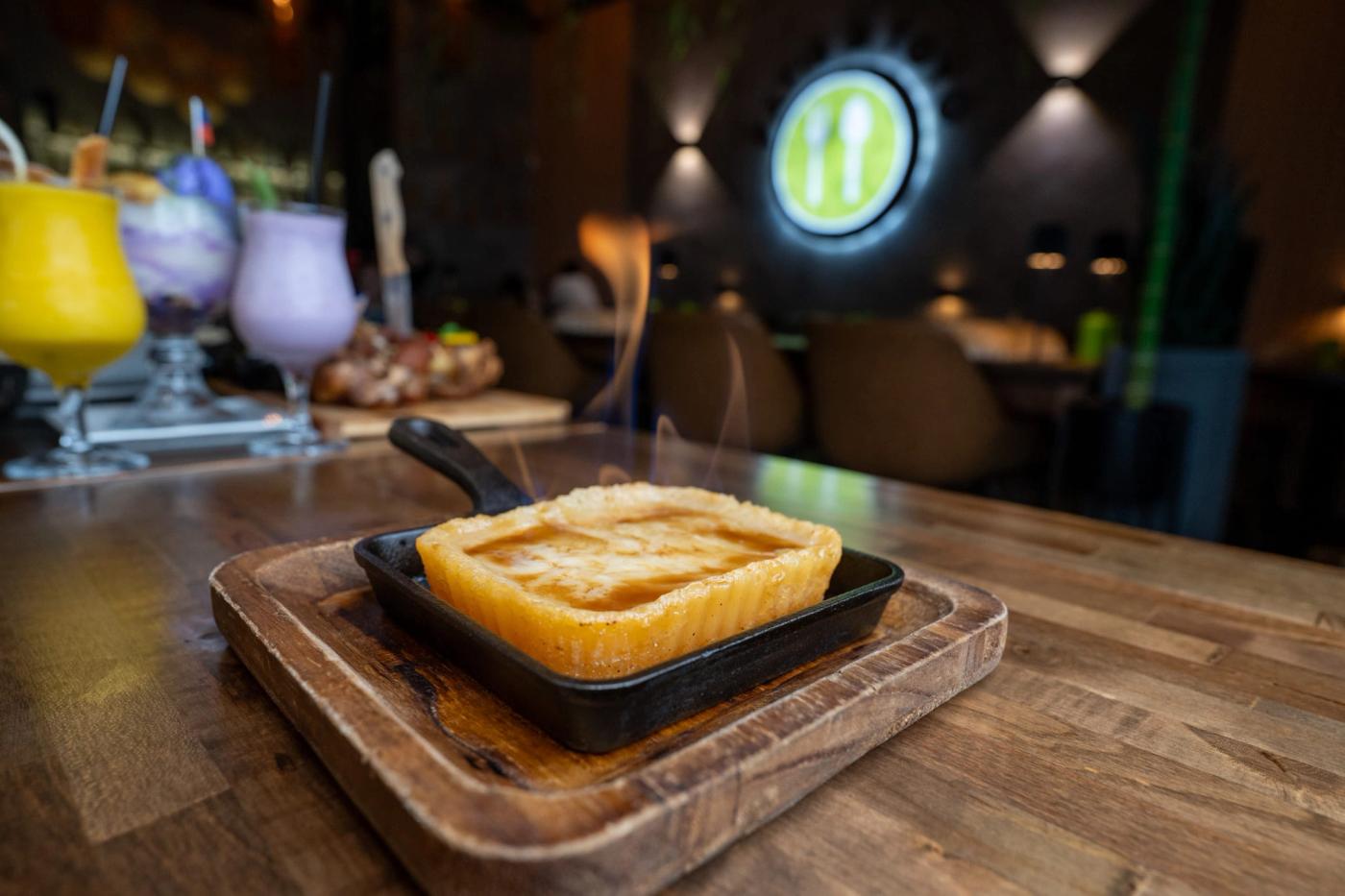
What do diners look at before they choose a restaurant?
Diners look at your food photos, your menu and your social pages before they decide, and the surveys on this point in the same direction.
According to Toast's 2024 diner social media study, 84% of diners surveyed would rather see photos of the food and drinks a restaurant serves on its social media page. The same Toast study found that 57% of diners say pictures of the food make them more likely to eat at a restaurant, more than any other kind of social post.
Checking ahead is normal behavior now. In that Toast 2024 study, 28% of diners always check a restaurant's social media before deciding to eat there, and another 62% sometimes do.
The menu gets the same attention. A US Foods survey of more than 1,000 Americans found that 83% look at a restaurant's menu before going, and half decide what to order before they arrive.
Put those together and a large share of your guests have already seen your food, read your prices and picked a dish before they reach the host stand. That moment, on a phone, is where food and drink branding does most of its work.
Do I need a new logo, or just better photos?
Most restaurants that are already open get more from better photos than from a new logo, because photos are what guests use to decide and the logo mostly helps them recognize you once they have.
A new logo does make sense in a few situations:
- You are opening a new concept or changing what you serve.
- The current logo is hard to read on a sign, a cup or a phone screen.
- It looks too much like another mark nearby and people mix the two up.
- You are adding locations and need one version that works everywhere.
Outside of those, fresh photos usually move more. If your Instagram is a mix of dim phone shots, a few images that look like stock and an old promo graphic, a guest scrolling through gets no clear sense of what you are. A new logo on top of that same feed would not change much.
Good photos also last. One well planned shoot gives you images for the menu, the website, the Google listing, the delivery apps and weeks of posts. That is why our photography service focuses on menu, interior and crew shots that make the food look worth the trip everywhere it shows up.
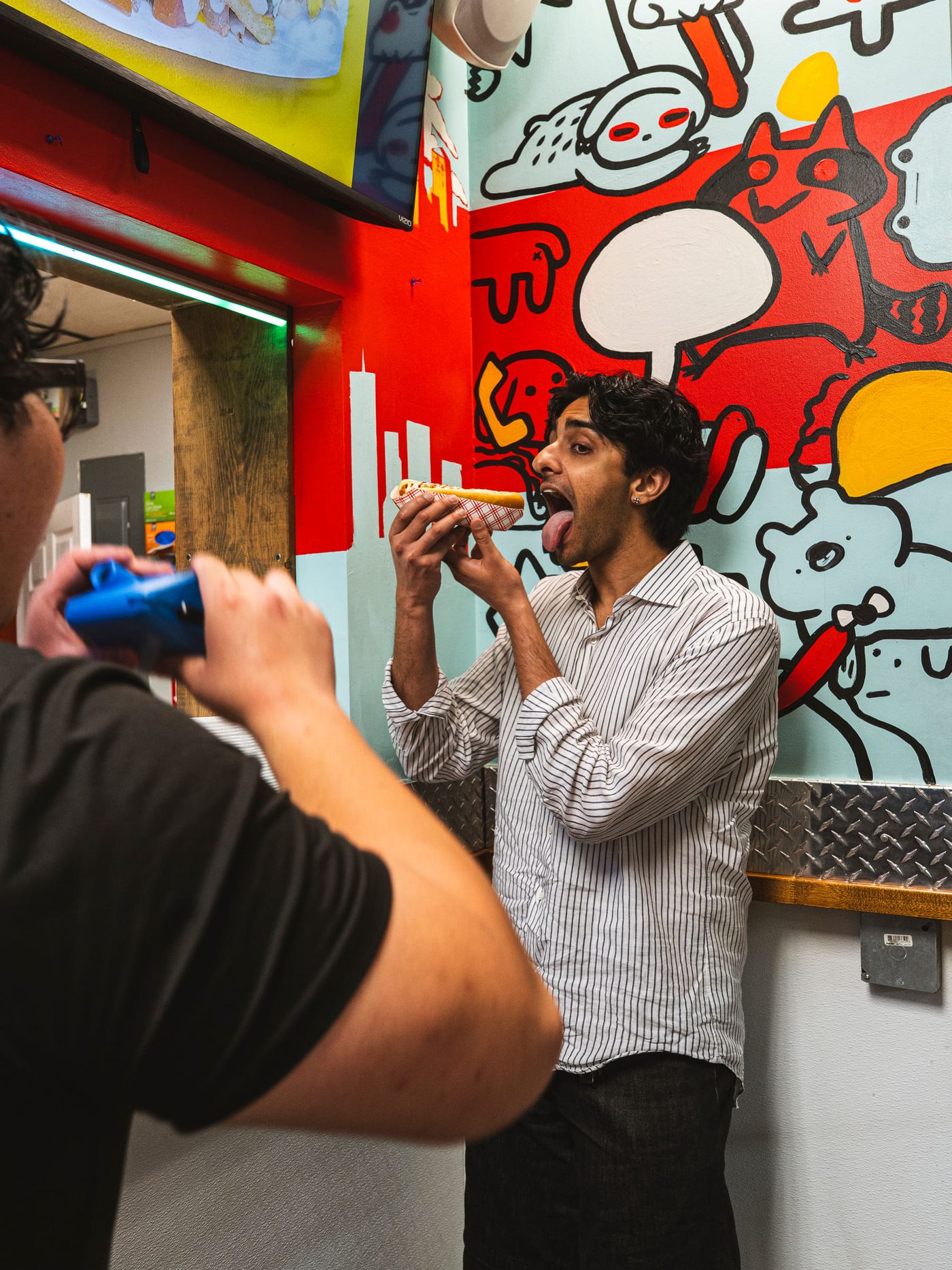
What does a brand rebuild look like for a Houston restaurant?
For Yoyo's Hotdog in Houston, a brand rebuild meant building around the menu and the reputation the place already had, not replacing them.
Yoyo's spent a decade as the place you lined up for after a night out. That reputation kept the lights on and stopped bringing new people in.
We rebuilt the brand, the content and the loyalty program around a menu that never changed. According to the Yoyo's Hotdog case study, the results were 229% sales growth in year one and 38,000 loyalty members from zero.
The lesson for other owners is that the food was never the problem. What changed was how the place was shown to people who had not been yet, and the reason regulars were given to come back.
What brand assets does a restaurant need before opening?
Before opening, a restaurant needs a readable name and logo, a finished menu, a first set of real photos and a complete Google listing, and most other brand pieces can come later. The core of food and drink branding at this stage is short on purpose, because you will learn a lot in your first months of service.
Lock these down first
- A simple logo that reads small. It goes on the sign, the door, cups, bags and your profile picture, so it has to work at the size of a thumbnail. A clean wordmark is enough to open with.
- The menu, in print and online. Use the same dish names, descriptions and prices everywhere. A US Foods survey found 65% of diners say an attractive menu affects what they order, and food photos on a menu influence nearly 3 in 4 diners, so restaurant logo and menu design deserves real time, with the menu getting more of it.
- A first round of photos. Shoot your best sellers, the room with people in it, the bar and the team. These fill your Google listing, website, delivery apps and early posts.
- Your Google listing. Get the name, hours, address, phone number, menu link and photos right, and make sure they match what is on your door.
- A short list of colors and fonts. Pick them once and use them on the menu, signs and social graphics.
For bars, the same list applies with drinks in place of plates. Good bar branding comes from cocktail photos, a drink menu and a listing that all describe the same room.
These can wait
- A custom typeface.
- A full brand guidelines book.
- Merchandise like shirts, hats and stickers.
- Murals, custom wallpaper and other large decor pieces.
- Special packaging beyond clean, labeled basics.
None of these are bad ideas. They just do less for you early on than a menu people can read and photos people want to eat.
How do I keep the look consistent across Instagram, the menu and the website?
Keep the look consistent by using the same photos, the same dish names and the same few colors everywhere, and by deciding them once instead of every time you post. Consistency is what makes food and drink branding feel like one place instead of several.
Consistent restaurant photos matter more than most owners expect. When the Instagram grid, the menu and the website use pictures from the same shoot, with the same light and the same plates, a guest hopping between them feels like they are looking at one restaurant.
A few habits make this easy to keep up:
- Shoot in batches. Use the same spot and the same light so new photos match old ones.
- Keep one shared photo folder. Label images by dish, and have everyone who posts pull from it.
- Treat the menu as one document. When a price or dish changes, update print, website, Google and delivery apps in the same week.
- Save templates. Build specials and event graphics from the same colors and fonts.
- Write down your voice. A few lines on how you describe food and reply to reviews keeps everyone sounding alike.
Where you focus depends on who you serve. According to Toast's 2024 study, 27% of diners aged 18 to 24 and 27% of those aged 25 to 34 use Instagram to find new restaurants, compared with 20% of those aged 35 to 44. The same Toast study found 59% of diners use Facebook more than any other platform to find new restaurants, so the photos on your Instagram should appear on Facebook too.
Your website needs the same care. A Toast survey of 1,157 US adults found 32% always check a restaurant's website before visiting and 51% sometimes do, so the site should carry the same photos and the same menu as everywhere else. We go through the shots each channel needs in The dish photos every channel needs.
Picture a taqueria in the Heights with a hand painted sign, a chalkboard menu and an Instagram feed run by whoever is free that day. Regulars love it. A new guest searching on their phone sees a blurry photo on Google, a menu file with old prices and a feed that is mostly memes.
Nothing about the food needs to change in that case. Fresh listing photos, an online menu that matches the chalkboard and posts drawn from one good set of photos would make all three look like the same taqueria.
A 90-day marketing plan for your restaurant
Fifteen pages covering what to post, what to spend, and what to track with a content calendar and ideas for you to post with.
Plan will be delivered via email with the PDF attached.
We only use your email to send the plan. Privacy policy
How much does restaurant branding cost?
Restaurant branding cost depends mostly on scope: a full new identity from a design agency sits at the expensive end, while better photos, a cleaned up menu and an accurate Google listing cost less and usually do more for a restaurant that is already open.
No trade body or industry survey publishes typical branding prices, so be careful with any single number you see. Agency price lists are the most common source. As one example, the design agency Musemind lists logo design at $2,500 to $8,000 on its own blog, which is one vendor's estimate rather than an industry average.
A full restaurant brand identity, with logo, colors, type and guidelines, is worth paying for when you open a new concept or expand. For everyone else, a few rules keep spending sensible:
- Spend first on what guests see most: the menu and the photos.
- If you do get a logo, ask for versions that work small, in one color and on a dark background.
- Ask exactly what you keep, including original files and the right to use photos everywhere.
- Plan to refresh photos when the menu or the season changes, not just once.
A smaller investment in food and drink branding that shows up on every channel will often beat a larger one that lives in a brand book nobody opens.
Can I do my restaurant's branding myself?
You can handle a lot of it yourself, especially the menu text, the Google listing and daily posting, but most owners get better results paying for the photos and the logo files.
Writing your own menu descriptions is a good idea, since nobody knows the dishes better than you. Keeping your listing accurate and replying to reviews is also something you can own.
Photos are harder to do well during a busy week. Lighting, plating and editing take time, and an uneven set of pictures works against the consistency that makes a brand recognizable. That is usually the first piece worth handing off.
Want to see what better photos would do for your restaurant?
The simplest way to find out is to book a demo shoot. We spend two hours filming at your restaurant, and three days later you get a reel, ten photos and a written plan for your brand. You keep the content either way.
Book your demo shoot and see your food the way new guests will.
