Short answer: Social media for restaurants works best when you choose one or two platforms, post three to four times a week plus daily Stories, which is Sprout Social's recommended starting point, and film everything during real shifts so it fits around service. The 90-day plan below lays that out week by week, with a time budget that one owner or one staff member can keep.
Most advice about restaurants and social media is a list of post ideas, and the hard part, finding time to make them, is left to you. This plan starts from your service hours instead. It covers when to film, what to post each week for three months, and how to tell whether any of it is bringing people through the door.
It is written for an owner or a single staff member doing the work, not a content team. If you later hand it off, the same schedule still works.
Which platforms should a restaurant be on in 2026?
Most independent restaurants should be on Instagram and Facebook first, then add TikTok once those two are running on a steady schedule. The first decision in social media for restaurants is where to show up, and the research points to the platforms your guests already use to look you up.
Facebook still matters more than many owners expect. In Toast's 2024 restaurant social media data study, 59% of respondents said Facebook is the platform they use most to find new restaurants. Since Instagram and Facebook are both run by Meta, you can usually share the same post to both without extra work.
Younger guests lean on social even more. Toast's July 2025 survey of 850 US adults found that 21% named social media as their second most popular way to find a restaurant, after Google, and among 18 to 34 year olds, 46% said they use social media to find a restaurant.
Here is how the main platforms tend to split the work:
- Restaurant Instagram: your menu in pictures. Photos, Reels and Stories live here, and it is where many people check your hours and your room before they come.
- Facebook: a way to reach locals who follow neighborhood pages and events, and a place many guests still message you.
- Restaurant TikTok: your best chance to reach people nearby who don't follow you yet. It rewards personality, so it works best when someone on the team is comfortable on camera.
Google is not a social platform, but it comes first in that same Toast survey. Make sure the hours, menu link and photos on your Google listing match what is on your profiles.
How often should a restaurant post?
A restaurant should start with three to four feed posts a week plus daily Stories, according to Sprout Social's guide for bars and restaurants. Stories disappear after a day, so they are the right place for tonight's special, a sold-out notice or a quick look at the line.
You may see much bigger numbers online. Sprout Social's 2025 Content Benchmarks Report found that travel and hospitality brands publish an average of 11 posts a day, but that figure reflects large brands with content teams, not a neighborhood spot with one person posting between tickets.
Even big brands are pulling back. Sprout Social found that brands across all industries shared an average of 9.5 posts a day across networks in 2024, down from 11 a day in 2022, and it reads that drop as a shift toward quality over quantity.
Consistency matters more than volume in social media for restaurants. A steady rhythm on the same days each week teaches followers when to expect you, and it is far easier to keep up than a burst of posts followed by a quiet month. It also puts you in good company: Toast's January 2024 analysis found that 76% of high-volume bars regularly post on social media.
How much time does restaurant social media take each week?
Social media for restaurants takes a manageable amount of time when it is batched into three set blocks each week and handed to one person. Without a schedule it tends to spill into every spare minute, which is part of why it feels heavy.
That feeling is common. In Square's 2025 Future of Restaurants report, three in four restaurant owners said they were spending more time running the business than a year earlier, and marketing and social media was one of the three areas taking up the most time.
Here is the time budget we suggest:
- One filming block a week. Pick the slowest service of the week and film during prep and the first stretch of service. Shoot enough for the whole week in one go.
- One editing and scheduling block. The next morning, before doors, trim the clips, write captions and schedule the week's feed posts.
- Short daily check-ins. A few minutes after the lunch rush and again after close to post a Story, reply to comments and answer messages.
Those check-ins matter. In Toast's 2024 data study, 43% of respondents said it is very important for restaurants to reply to comments or messages on social media. A guest asking whether you take walk-ins on Friday is a table waiting to be filled.
Who should do it? Usually the owner or one staff member who already enjoys posting, like a server or a sous chef. Make it part of their paid hours, not a favor. If nobody on your team has room, our social media management service takes over the calendar and the comments so it isn't one more thing on your list.
How do you film content during a real shift without slowing service?
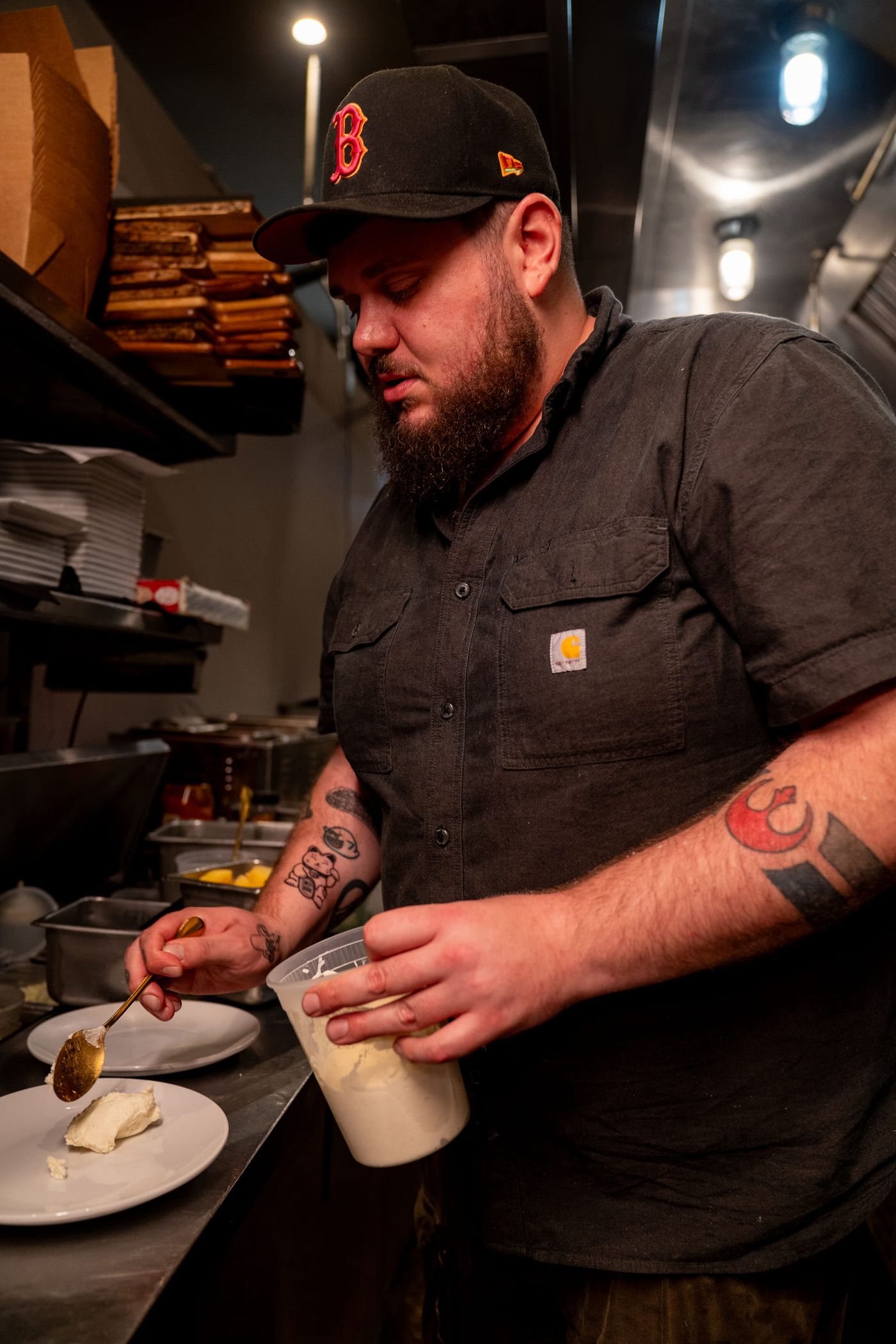
Film in short bursts at moments when the kitchen is already working at its best, and put the phone away during the peak. Real shifts make better content than staged shoots because the steam, the noise and the full room are what guests are hoping to find.
The moments that work best:
- Prep: knife work, sauces going on, dough being shaped, the walk-in getting stocked.
- Pre-shift: the crew lining up, the bartender cutting garnishes, the lights coming on.
- The first tickets: a signature dish plated at the pass, a drink poured, plates leaving the window.
- The room: tables filling, a regular at the bar, the door opening on a busy night.
Picture a taqueria in the Heights. The trompo gets loaded in the afternoon, tortillas come off the comal as the first orders land, and the line forms around dinnertime. That one service, filmed in pieces, can carry a whole week of posts.
A few habits keep it easy. Shoot vertically, stand near natural light when you can, keep clips short, and ask guests before you show their faces.
What should a restaurant post in the first 90 days?
In the first 90 days, spend the first month introducing the place, the second month reaching people who haven't found you, and the third month giving followers a reason to come in. This is the part of marketing a restaurant with social media where most plans go vague, so here it is week by week.
Before week one: fix the profile
Put your hours, address, menu link and order or reservation link in your bio. Use the same name, hours and photos everywhere, including Google. Pin a few posts that show your signature dish, your room and how to find you.
Weeks one and two: introduce the place
Post the dish people should order first, the room at its best, and the people who run it. Add a post that answers the questions guests ask most, like parking, reservations or whether you take walk-ins. Post a Story every day, even if it's just what's prepped for tonight.
Weeks three and four: set a weekly rhythm
Pick recurring posts that land on the same day each week, such as a Monday look at the week's special or a Friday clip from the bar. Reply to every comment and message within a day. When guests tag you, reshare the good ones with their permission.
Weeks five to eight: reach people who don't follow you yet
Shift toward short video for Reels and restaurant TikTok. Aim for one people-forward video a week: the chef explaining a dish, the owner telling how the place started, or a cook showing the step nobody sees. If your menu rarely changes, our guide to what to post when nothing new is on the menu has ideas for keeping familiar dishes interesting.
Weeks nine to twelve: give followers a reason to come in
Point posts at the nights you want to fill. Show the slow-night special, the happy hour, or the dish that only runs on weekends. Feature regulars who agree to it, and give followers something to mention at the counter so you can see who came from social.
Week thirteen: review and plan the next quarter
Look at which posts got saved, shared or messaged about, and which nights moved. Keep the series that worked, drop the ones that didn't, and repeat the cycle with what you learned. That habit is what keeps social media for restaurants from turning into guesswork.
A 90-day marketing plan for your restaurant
Fifteen pages covering what to post, what to spend, and what to track with a content calendar and ideas for you to post with.
Plan will be delivered via email with the PDF attached.
We only use your email to send the plan. Privacy policy
How do I know if social media is bringing in guests?
You know social media is bringing in guests when you track the few signals that connect posts to visits, rather than likes alone. Many guests look you up quietly and never comment, so the effect can be bigger than your engagement suggests.
The research backs that up. In Toast's 2024 data study of 850 adults who use social media at least weekly, 62% said they sometimes check a restaurant's social media before deciding to eat there, 28% always check, and 10% never check. BrightLocal's Local Consumer Review Survey 2026 found that 24% of consumers go on to visit a business's social media channels after reading reviews.
Reviews and social work together. Toast reported that 46% of respondents check Google Reviews first when looking up restaurant ratings and reviews, and BrightLocal's survey suggests a share of those people head to your profile next. Your feed works as a second menu even when it doesn't get the credit.
Signals worth tracking:
- Platform insights: profile visits, link taps, and taps for directions or calls in Instagram and Facebook.
- A word to mention: a phrase guests say at the counter or a code in online ordering, shared only on social.
- The host stand: a simple "How did you hear about us?" noted on a tally sheet.
- Messages: DMs asking about hours, reservations or a dish you just posted.
- Night-by-night sales: compare the nights you promoted against the same nights before the plan started.
What does this look like for a Houston restaurant?
For Yoyo's Hotdog in Houston, it looked like rebuilding the brand, the content and the loyalty program around a menu that never changed. Yoyo's spent a decade as the place you lined up for after a night out. That reputation kept the lights on and stopped bringing new people in.
According to our Yoyo's Hotdog case study, the results were 229% sales growth in year one and 38,000 loyalty members from zero. Content was one part of that work, alongside the brand and the loyalty program.
The lesson for other owners is that social media for restaurants doesn't need new dishes to work. It needs a steady schedule, real footage from real shifts, and a way to turn followers into regulars.
Can someone film your first batch of content for you?
Yes, our demo shoot films your first batch of content during a real shift at your restaurant. If you want to see what social media for restaurants looks like with your own food and your own crew, we spend two hours filming on site.
Three days later you get a reel, ten photos and a written plan. You keep the content either way.