Short answer: Geofencing for restaurants means showing ads to phones that enter a boundary you draw on a map. That boundary could be a stadium, an office park or your own block, and the ads often follow those people in the days after. It pays off when the fenced place holds a large, specific crowd that a normal radius ad can't pick out. When you simply want to reach everyone nearby, a Meta radius ad usually does the same job for less.
Ad sellers pitch geofencing to Houston owners a lot. The pitch usually skips the parts that matter. Who will the ads reach? What does the minimum spend look like? How would you know if a single guest walked in because of them?
This guide covers those parts in plain terms. It explains geofencing and retargeting and gives you an honest test for when a fence is worth the money. It also shows how to measure the results without taking anyone's word for it.
What is geofencing advertising, and how is it different from a Facebook radius ad?
Geofencing advertising shows your ad to people whose phones have been inside a boundary you draw. A Facebook radius ad shows your ad to people Meta believes live in or are passing through a circle around a pin. The difference sounds small, but it changes who sees your ad and when.
A geofence can trace the outline of one building, one parking lot or one venue. Most geofencing is bought as programmatic ads. That means software places your ad across many apps and websites at once and decides who sees it using location signals from people's phones. Those signals come from apps that have permission to use location, so accuracy can vary from one device to the next.
A radius ad is simpler. Meta Ads Manager is Meta's tool for running ads on Facebook and Instagram, and it lets you drop a pin on your address and choose a distance around it. That circle includes homes, offices, highways and everything else inside it, so it can't separate the crowd at one stadium from the neighborhood around it.
The other difference is timing. A geofence builds a list of devices that the ad platform detected inside it, and you can keep showing ads to that list after people leave. A radius ad mostly reaches people while they live, work or travel in that area.
Geofencing also has a use that has nothing to do with ads. According to Restaurant Dive's 2023 report on McDonald's Investor Day, McDonald's said geofencing in its mobile app cut wait times by 62 seconds for mobile pickup customers. The app knew when a guest was close and could start the order. That is an operations tool, and it is separate from the advertising this post covers.
How much does a geofencing campaign cost for a restaurant?
There is no reliable industry survey of what geofencing for restaurants costs. The honest answer is that cost depends on the seller, the size of the fence, how many days it runs and how much management the seller bundles in. The price ranges you will find online come mostly from agencies and vendors selling the service, and we have left them out on purpose.
What you can do is ask every seller the same questions in writing. How is the media priced, by impressions or by clicks? Is there a minimum monthly spend? What is the management fee, listed separately from the ad spend? Whose account does the campaign run in, and can you see the fence on a map and the number of times the platform showed the ad?
That last question matters more than it looks. Our paid advertising work for restaurants keeps the ad budget in your name and paid straight to the platform. Whoever you hire, you should be able to see where your money went.
The second test is audience size. A fence only works if enough phones pass through it to fill the campaign. A small fence around a quiet spot may barely deliver, or it may show the same ad to the same few people over and over. If you can't fund a fence for the full event dates plus the days of follow-up afterward, the test will be too thin to tell you anything.
Paid ads are already part of most restaurants' plans. According to Toast's November 2024 restaurant advertising guide, 67% of restaurants pay for ads on social media. Toast is a point-of-sale and online ordering system that many restaurants use to ring up orders. It publishes research drawn from its customers and surveys, which is why its numbers show up in restaurant marketing.
When does a Meta radius ad do the same job for less?
A Meta radius ad does the same job whenever the people you want are, in plain terms, everyone who lives or works near you. For most neighborhood restaurants, that covers the majority of what a paid campaign needs to do.
Think of a dumpling shop in Spring Branch that wants more Thursday dinner traffic. Its guests come from the surrounding apartments, homes and offices. A radius ad around the shop, shown to adults in that area on Wednesday and Thursday, reaches those people directly. Drawing fences around individual buildings would cost more to set up and reach roughly the same crowd.
Radius ads also make sense for a new opening, a delivery zone, a new menu item or a slow night you want to fill. In each case, the goal is to reach the area, and Meta can narrow that area further by age and interests without extra tools. Our first-month marketing plan for a new restaurant shows where a paid push fits in the budget.
The creative matters as much as the targeting. In Toast's July 2024 social media survey, 84% of respondents said they preferred seeing photos of a restaurant's food and drinks on its social accounts. A clear photo of the dish you want to sell will do more for a radius ad than a clever targeting setup.
Before spending on any location-based ads in Houston, check that people can find you without them. In Toast's October 2025 discovery survey, 18% of respondents said they used map apps and 16% said they used search results to find new restaurants. That means your Google Business Profile should be accurate before an ad sends anyone looking for you. Your Google Business Profile is the free listing that shows your hours, photos and reviews in Google Search and Maps.
Is it worth fencing a competitor, a stadium or an office park?
Fencing a stadium or an office park can work in Houston when the crowd is large, predictable and close enough to come to you. Fencing a competitor works less often and needs more care. Here is how each one plays out.
Fencing a stadium or event venue
Houston has big, scheduled crowds at places like NRG Stadium, Toyota Center and the convention center downtown. Because venues publish event dates ahead of time, you can run the fence only on those days and pay for nothing in between. Picture a sports bar in EaDo a short walk from the soccer stadium. It fences the stadium on match days. Then it shows an ad for its postgame menu that evening and over the following days.
This works when your restaurant is close enough to be the obvious next stop, or when you deliver to the area. If the venue is across town, the fence will reach plenty of people who will never make the drive.
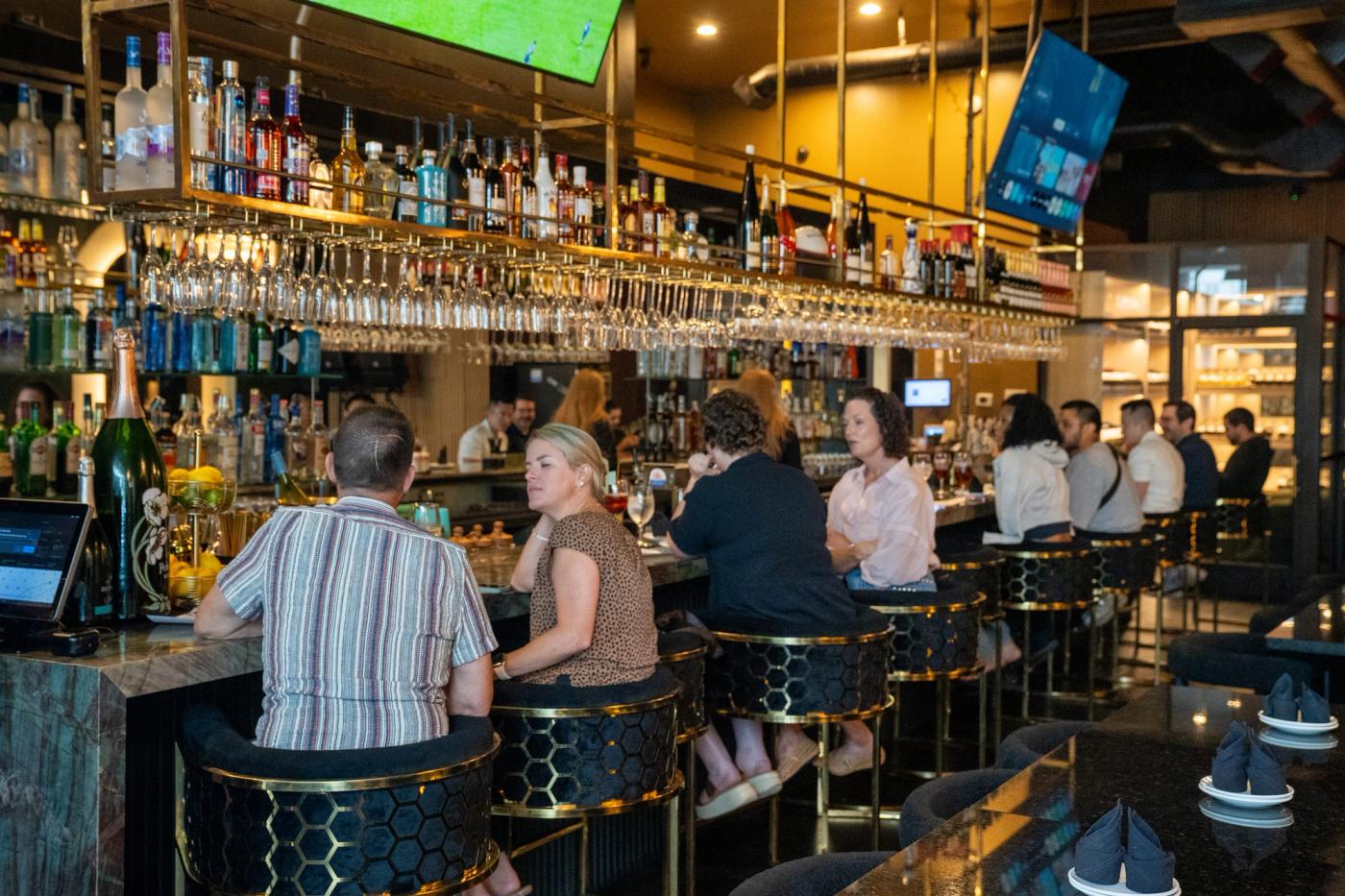
Fencing an office park or medical campus
Office areas like the Energy Corridor, Greenway Plaza or the Texas Medical Center hold thousands of weekday lunch decisions in a tight area. A fence around a specific campus, running on weekday mornings, can put your lunch special in front of people who are deciding where to eat in the next few hours.
Office fences also reach the people who order food for meetings. If catering orders are the bigger prize, our guide to catering ads that bring in corporate and event leads covers the search side of that work.
Fencing a competitor
Fencing another restaurant can reach people who already like your kind of food, but it is the least reliable of the three. Those guests have already chosen where to eat. The fence often catches a shared parking lot or neighboring businesses. Phone location is also not precise enough to be sure who was inside. Ad platforms may also limit how advertisers can use location data, so ask your seller what the platform allows.
If you try it, keep the ad about your own food and your own reasons to visit, and never mention the other place. Run it as a small test with a trackable offer, so geofencing for restaurants in this form has to prove itself before you spend more.
Fencing your own restaurant
The fence many owners overlook is the one around their own building. It builds a list of phones that visited you, which you can use to remind past guests about a new item or a slow night. It is often the most useful geofencing marketing a restaurant can run, because everyone on that list already knows where you are.
A 90-day marketing plan for your restaurant
Fifteen pages covering what to post, what to spend, and what to track with a content calendar and ideas for you to post with.
Plan will be delivered via email with the PDF attached.
We only use your email to send the plan. Privacy policy
What is retargeting, and do I need a pixel on my site?
Retargeting means showing ads to people who have already interacted with you. If you want to retarget people who visited your website, you do need a small piece of tracking code, called a pixel or tag, on your site. The setup is usually simpler than it sounds.
The Meta Pixel is code from Meta that records when someone visits your site or your menu page, so you can show those people ads on Facebook and Instagram later. The Google tag does the same job for Google Ads, which is Google's tool for running ads in search results, on YouTube and across websites. Many website builders and online ordering platforms have a field where you paste in the pixel ID. Some third-party ordering pages may not allow it, so check yours before you plan around it.
If you add a pixel, your privacy policy should say so, and you need to follow each platform's rules on what you track. Your web or ordering provider can usually tell you what is already in place.
You can still run retargeting ads for restaurants without a website pixel. Meta can build audiences from people who watched your videos, engaged with your posts or messaged your page. A geofence list, including one around your own restaurant, is another form of retargeting that doesn't depend on your website at all.
Retargeting works well when the ad gives people a reason to come back now, not just a reminder that you exist. If you need help choosing that reason, our post on slow-night offers that still make money walks through the margin math.
How do I tell if geofencing brought anyone in the door?
You tell by giving each campaign its own offer that only the ad mentions and checking your register for that offer. If you run Google Ads and qualify, you can also turn on Google's store visit tracking. No single method of measuring geofencing for restaurants is perfect, so use more than one.
The simplest method is a unique offer. Put a specific item, code or phrase in the fenced ad and nowhere else, then count how often it rings up in your point-of-sale system. Train the staff to log it, and ask guests at the counter how they heard about you during the test.
Google offers a built-in option for some businesses. According to Google Ads Help on store visit conversions, physical locations including restaurants may be eligible for store visit tracking if they meet certain criteria. Because the reporting uses Google AI, Google needs enough data before it can report visits. A single location with a small budget may not reach that threshold, so treat it as a bonus rather than a guarantee.
When it does work, Google's help page on store visit reporting explains that store visits show up under the "All Conversions" column by default. The same page explains that a "Cost / Store visits" figure shows the average cost of each visit. That gives you a number you can compare with what a typical guest spends.
Programmatic sellers often send their own visit reports. Before you trust one, ask how the seller measured it and whether it compares people who saw the ad with similar people who didn't. A report that only counts visits from people who saw the ad will include many guests who would have come anyway.
A practical check for geofencing for restaurants is to run the fence on some event days and not others, then compare sales on comparable days. It is rough, but it is your own data.
What does a Houston restaurant need in place before paying for ads?
A Houston restaurant needs something worth showing and a way to keep the guests an ad brings in, because ads multiply what is already working rather than fixing what isn't. That holds for radius ads, retargeting and any fence you draw.
Yoyo's Hotdog is the clearest example we can share. Yoyo's spent over a decade as the place people lined up for after a night out, and that reputation kept the lights on but stopped bringing new people in. We rebuilt the brand, the content and the loyalty program around a menu that never changed. The Yoyo's Hotdog case study reports 229% sales growth in year one and 38,000 loyalty members from zero.
That result came from the brand, the content and the loyalty program working together, not from a geofence. The lesson for anyone weighing geofencing for restaurants is that a loyalty list turns a single ad-driven visit into repeat visits, which is what makes the ad spend worth it.
Want to see what your ads look like before you spend on them?
The easiest way to judge whether paid ads will work for you is to see your own food and room on screen first. That is what our demo shoot is for.
We spend two hours filming at your restaurant, or at the truck if you run a food truck. Three days later you get a reel, ten photos and a written plan for where to run them. The plan covers whether a radius ad, retargeting or a fence makes sense for your location. You keep the content either way. Book your demo shoot here.